
What is sales intelligence in 2026 and why most teams are still stuck in 2015

Table of Contents:
If you still think sales intelligence means better contact data, you're way behind
For years, sales intelligence was glorified contact lists disguised as insight, and teams treated it like wisdom. Tools gave you names, titles, and emails and called it insight. That definition worked when buyers filled out forms and responded to cold outreach.
But that world doesn't exist anymore.
Today, buyers engage across fragmented touchpoints, including product activity, website visits, emails, calls, and calendar events. None of that shows up in your CRM unless you have the right signals in place. And most teams don't.
Sales intelligence has evolved. It's no longer about who fits your ICP, rather it's about who’s moving, what they’re reacting to, and where your reps need to act.
This guide breaks down what sales intelligence actually looks like now and why teams clinging to the old definition are leaving revenue on the table.
How sales intelligence evolved and why most teams are still behind
Sales intelligence didn't show up fully formed. It evolved in layers, and most teams are still stuck in the early stages. The definition shifted every time buyer behavior changed. If your tools haven't kept up, you’re flying blind.
Here's what that evolution looked like:
1. Data enrichment & contact intelligence
Before 2015, Sales intelligence meant access. Tools like ZoomInfo gave teams giant databases of names, titles, and emails. Coverage was the KPI and more leads meant more pipeline.
Then between 2015–2020, CRMs got auto-enrichment. Firmographics and technographics were used to score leads and segment lists. Teams stopped typing in data, but still had no idea who was actually interested.
Now contact data is table stakes. Leading teams combine enrichment with behavior signals to prioritize outreach, trigger sequences, and automate routing. Intelligence now means action, not just access.
2. Intent & warm-signal intelligence
Between 2016–2019, intent data showed up in the form of topic research and content consumption trends, mostly vague, account-level signals from third-party sources. Helpful in theory, but rarely tied to real buyers.
Then from 2020–2023, signals got sharper. Teams began tracking website visits, product usage, community activity, and reverse IP data and linking that behavior to actual contacts. Outreach shifted from cold guessing to warm timing.
Now, intent is layered and precise. The best teams combine first-, second-, and third-party signals in real time to prioritize accounts, personalize outreach, and align their sales motion with actual buyer behavior.
3. Conversation intelligence
Between 2018–2021, conversation intelligence meant call recording and transcription. It helped managers review calls and spot coaching moments (if they had time to dig.)
Since 2022, CI has become a pipeline driver. AI highlights talk ratios, objection handling, rep behavior, and methodology gaps tied directly to deal outcomes. Coaching and deal reviews run on real interaction data, not gut feel.
Now, conversation intelligence is core to sales execution. It tells teams which deals are stalling, what top reps do differently, and where to focus, all based on what buyers actually say.
What this means for your team
If you’re still defining sales intelligence as contact enrichment or static dashboards, you’re operating two stages behind. The teams winning today use dynamic, behavioral signals across the entire funnel and act on them in real time.
Key takeaways on sales intelligence
- Sales intelligence isn't just better contact data anymore. It's a system of real-time signals across the funnel, like who to contact, who's showing intent, and what buyers are actually saying.
- The definition has evolved. It started as contact enrichment, became intent-driven, and is now about full-funnel action. If you're still relying on static lists or dashboards, you're already two steps behind.
- SDRs and AEs use sales intelligence to prioritize warm leads, time outreach with real buyer signals, and personalize their approach based on what prospects care about.
- Sales managers and RevOps teams rely on it to monitor deal risk, coach reps with actual conversation data, and improve pipeline visibility without waiting on CRM updates.
- The best teams unify enrichment, engagement, and execution. Sales intelligence platforms like Avoma combine conversation, coaching, and deal data into one system that drives action, not just insight.
Modern sales intelligence: What it actually is now
Sales intelligence today is a system of signals that tell you who to contact, who's showing intent, and what buyers are actually saying.
It goes far beyond databases or enrichment. Modern sales intelligence unifies data across the buyer journey right from first touch to closed-won and turns it into action:
- Who to contact — via enriched profiles, firmographics, and technographics
- Who's showing intent — via job changes, website visits, ad clicks, and dark funnel activity
- What buyers are actually saying — via recorded meetings, call transcripts, and email replies
When these signals flow into one system, sales teams stop guessing. Reps prioritize better, managers coach in context, and RevOps eliminates blind spots.
This is sales intelligence in 2026: insight in motion, not static data.
Sales intelligence across the funnel: From signal to action
Modern sales intelligence isn't a one-stage tool. It's a full-funnel system that evolves with the deal. Most teams stop at enrichment. Top teams go all the way from discovery to close, turning fragmented signals into focused action at every step.
Here's what that actually looks like:
Who uses sales intelligence and why?
Sales intelligence plays a crucial role across the sales org. Here's how different personas leverage it:
- SDRs (Sales Development Reps)
SDRs use sales intelligence to prioritize high-intent leads, enrich contact data, and time their outreach effectively. This helps them spend less time researching and more time booking quality meetings. - AEs (Account Executives)
AEs rely on sales intelligence for visibility into buyer behavior, meeting history, and deal momentum. It helps them personalize conversations, qualify deals faster, and reduce the risk of deals going cold. - Sales managers
Sales managers use it to monitor rep activity, identify coaching opportunities, and improve team-wide execution. With clear insights into talk patterns and deal progression, they can coach with data. - VPs of Sales
While not hands-on users, VPs benefit from the output of sales intelligence to improve forecast accuracy, reduce pipeline risk, and drive consistent performance across the org.
How does sales intelligence work?
Sales intelligence works by collecting data from daily sales activity such as calls, emails, meetings, calendars, and CRM updates. It also pulls in external signals like buyer intent, company size, industry, funding news, and hiring activity.
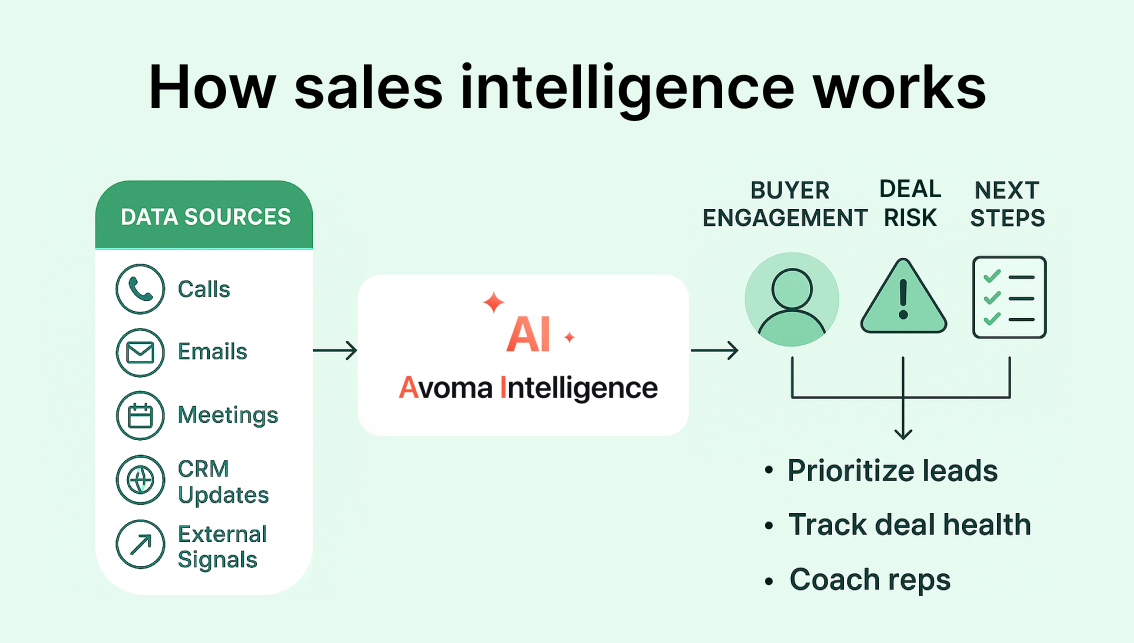
It processes this data in real time to show which buyers are engaged, which deals are slowing down, and what steps to take next. By connecting patterns across tools—for example, when a decision-maker stops replying or skips meetings—it flags deals at risk before they stall.
With these insights, reps spend less time chasing updates and more time advancing active deals. Managers coach based on real buyer activity instead of assumptions.
What is the difference between sales intelligence and business intelligence?
Real-world example: A RevOps manager uses business intelligence to analyze win rates by region over the past year. With sales intelligence, they can instantly see which active deals are at risk this week due to low buyer engagement.
Can they coexist? Yes. Business intelligence supports long-term strategy. Sales intelligence supports daily execution.
Which should you choose? Use business intelligence for executive planning. Use sales intelligence to help reps and managers act faster and close better.
What is the difference between sales intelligence and revenue intelligence?
Real-world example: Sales managers use sales intelligence to spot deals that have stalled this week. Revenue intelligence platforms are used to understand how much churn is expected this quarter and what impact it has on revenue.
Can they coexist? Yes. Revenue intelligence supports strategy. Sales intelligence drives execution.
Which should you choose? Use revenue intelligence when you need GTM alignment across sales and CS. Use sales intelligence when you want real-time visibility and coaching at the deal level.
What is the difference between sales intelligence and CRM?
Real-world example Your CRM shows a deal is in the proposal stage. Sales intelligence tells you the buyer hasn't opened the proposal and your main contact has gone silent.
Can they coexist? Yes. Sales intelligence makes the CRM smarter and more useful. It doesn’t replace but enhances it.
Which should you choose? Both are essential. CRM is your system of record. Sales intelligence drives action and results.
How to choose the right sales intelligence platform
The right sales intelligence platform helps sales and RevOps teams focus on high-intent accounts, respond to real buying signals, and eliminate guesswork in deal execution. Here’s what you should look out for in a sales intelligence software.
- Real-time insights
The platform should show what buyers are doing and surface risks while deals are still in motion and help teams focus on engaged accounts.
- Workflow integration
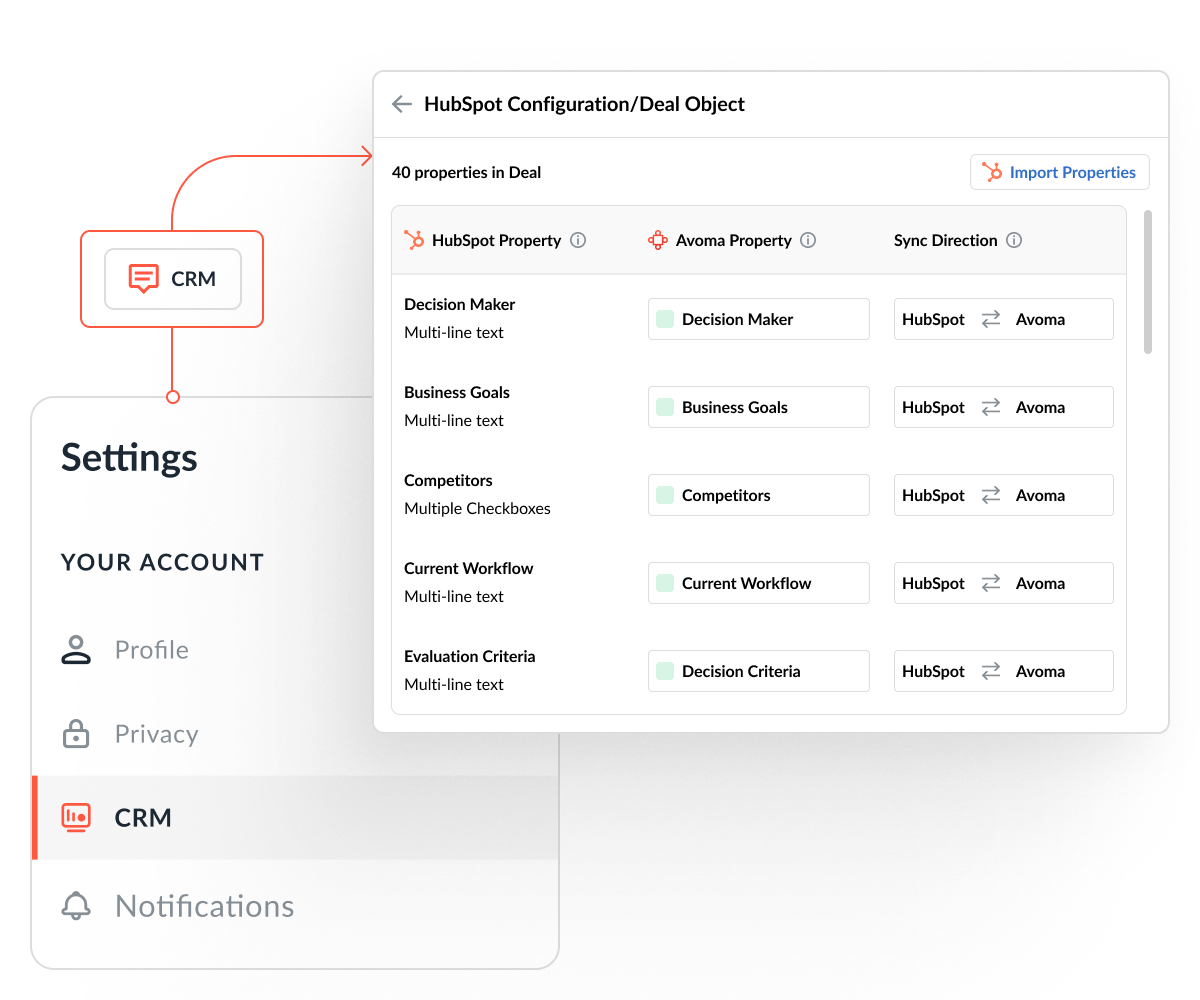
It should sync with CRM, email, calendar, and meetings automatically and save manual data entry for reps.
- Action and adoption
Insights must lead to action. The tool should suggest follow-ups, fit into tools your team already uses, and require little training.
- Coaching and performance
Look for tools that reveal rep behavior, talk patterns, and common objections. Managers should be able to coach using data, not just outcomes.
- Scalability
The platform should support both outbound and product-led sales motions. It must grow with your team, stay cost-effective, and be useful across roles.
How sales intelligence tools like Avoma empower sales teams
Sales intelligence delivers the most value when connected to real workflows. High-performing teams use sales intelligence tools like Avoma and close more deals by turning buyer signals into decisions that drive outcomes.
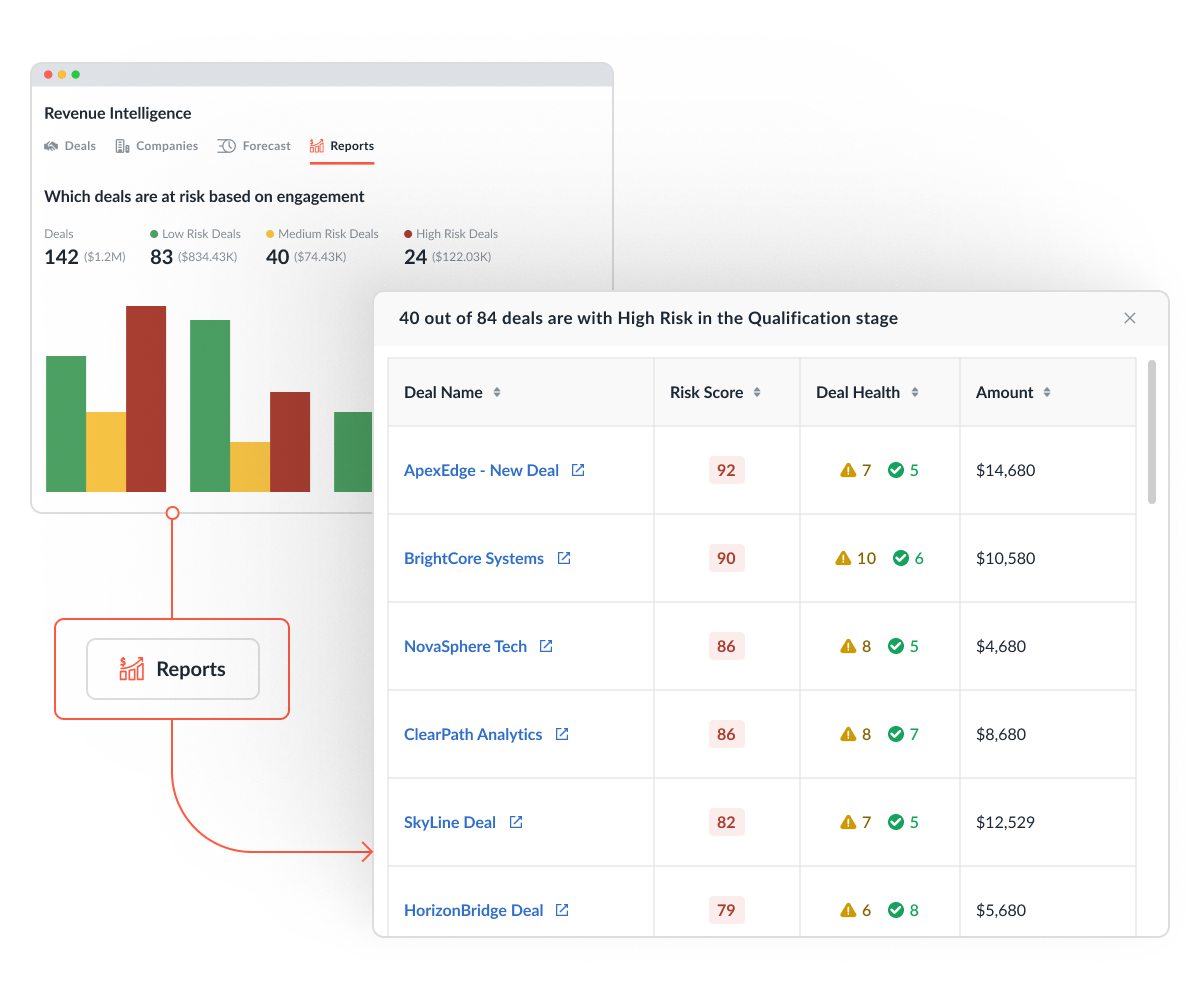
- Deal intelligence
Reps get alerts when deals stall, follow-ups go cold, or decision-makers disengage. Managers can focus attention where it matters and intervene before deals fall through.
- AI sales methodology
Sales leaders can see whether reps follow qualification steps like identifying pain, confirming decision criteria, and validating urgency. Avoma maps conversations to frameworks like MEDDIC and SPICED, so coaching aligns with your process.
- Coaching intelligence
Managers track how reps navigate objections, position value, and lead discovery. They use this insight to coach based on what’s working instead of outcomes or intuition.
- Meeting intelligence
Avoma tracks how reps perform in meetings by capturing talk time, key topics, and meeting outcomes. This helps leaders understand what drives productive conversations and what needs improvement.
- Buyer engagement tracking
Teams can view buyer activity across meetings, follow-ups, and responses. This helps prioritize the most engaged accounts and avoid deals that quietly lose momentum.
Accelerate deal closure with sales intelligence
Modern buying behavior is fast, fragmented, and hard to track. Yet many sales teams still rely on CRM fields, manual notes, and static reports, thereby impacting deal closures and forecast accuracy. Sales intelligence solves this by connecting signals from all interactions and turning them into actionable insight. Avoma extends this value by combining sales, conversation, and revenue intelligence in one platform. It captures what buyers say, tracks how reps sell, and shows what’s needed to move deals forward.
Connect with our product experts to see our sales intelligence platform in action. Book a free demo today.
Frequently Asked Questions
It tracks buyer activity and deal momentum in real time, giving sales leaders early signals about which deals are likely to close and which are at risk—so forecasts are based on actual engagement, not just rep updates.
Sales intelligence is valuable for SDRs, AEs, sales managers, and RevOps teams. It helps each role make faster, more informed decisions based on buyer behavior and deal insights. It uses a mix of internal signals like calls, emails, and CRM updates, and external data like intent signals, funding news, and hiring activity.
No. CRM is still your system of record. Sales intelligence enhances it by automating data capture and turning it into actionable insights.
If you're missing deal risks, coaching lacks context, or forecasting feels unreliable, your team will benefit from sales intelligence.
Avoma combines sales, conversation, and revenue intelligence in one platform to support reps, managers, and RevOps with insights across the funnel.


Dive into Our Latest
Avoma Insights.

What's stopping you from turning every conversation into actionable insights?


